Space Clearing with Sage

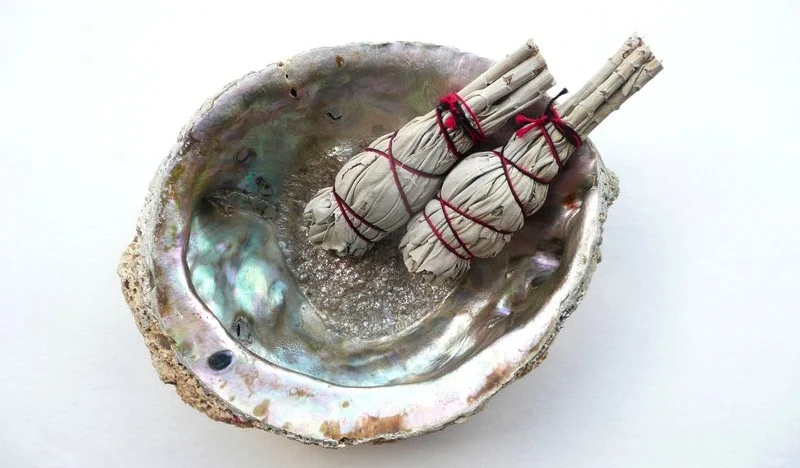
If you’ve ever heard the term “smudging” and it wasn’t in reference to mascara, you probably know what saging for space clearing is. Or at least that it exists. Smudging is not a feng shui term, and for our purposes, we will refer to it as saging, but essentially, they are one in the same. Saging dates back hundreds of years, and although it is known to have been present in many cultures, the most relevant and popular history of this practice comes from the American Indian. Native Americans utilized saging based on the idea that during this process, smoke attached itself to any negative energy, and when the smoke dissipated, any negative energy was taken along as well, thus clearing the room of these not-so-friendly vibes. Some research also makes a symbolic connection between the transformation of physical herbs into their spiritual form as smoke. The art of saging is still alive today and can be used for the feng shui practice of space clearing.

Though there are various types of sage, the most commonly used plant for the process of smudging is white sage, which often comes from California, and therefore is referred to as California White Sage. White sage can also be identified by its plant name, Salvia Apiana. Interestingly, the latin term “salvia” is actually derived from the term “to heal,” which serves as another testament to the history of saging. In addition to being most common, white sage is also the most recommended type for use in saging, although it is said that, provided it is dried, garden sage will also work. White sage is recommended, but for the most part, it is the intention behind this practice that grants the process its power. It is worth noting that whatever sage you choose to use, you should make sure it’s pure and organic, otherwise burning it and breathing in the smoke could be very dangerous.

Once you’ve collected the sage for your space clearing, there are specific steps to follow during the actual process.

  1. Before doing anything else, it’s important to clear the space you intend to sage. Ensure that the area is physically clean and clear of clutter. Turn off all electronic devices within the space. Perhaps the most important aspect of saging is the idea of clearing your head and focusing on specific intentions.
  2. Once your intention is set, light the sage, then slowly wave it about to extinguish the fire and produce smoke. If you have a sage stick, hold one end and light the other. If you have chosen to use loose sage, be sure to have a fireproof container near to hold the sage as it burns.
  3. Once your sage is smoking, slowly move through your space to ensure that smoke reaches to all corners and places. Be sure to concentrate on specific areas where energy enters the room such as doorways and hallways, and take time to make sure closet and cabinet doors are open.
  4. If you’ve been compelled to sage your space, you will likely know what area needs attention, so follow that feeling. You can also guide smoke in all four compass directions, to the heavens above, to the earth below, and within. 
  5. After you clear a space, make sure to fill it with positive intention!

Some suggest burning incense following the smudging, as sage is a masculine smell with yang features, and the femininity and yin of incense balance this out.

Finally, if possible try to obtain sustainably harvested materials. Do the best you can!

Saging is a great way to clear your space! Although it is not traditionally used in feng shui, it's another tool for creating your own holistic space.

by Anjie Cho


eHow.com Video: Eco-Friendly Home Decorating

Eco-Friendly Home Decorating

Eco-Friendly Home Decorating

Low VOC paints provide an eco-friendly way to change the look and feel of your space. Donate extra supplies and buy locally to prevent waste and support local eco-systems. 

see more eHow.com videos here

Video Transcript:

Hi, my name is Anjie Cho, and this is a video about eco-friendly home decorating.

There are many simple ways to decorate your home in an eco-friendly way. Something that many of my clients want to change when it comes to home decorating is the color of the paint on the wall. This is a fairly easy and inexpensive way to change up the way your home looks and feels. But, no matter what color you choose, the type of paint you go with can make a difference.

The green option is to go for a low or Zero VOC paint. VOC stands for Volatile Organic Compound. Toxins are released into the air by traditional VOC paints, and sadly VOC paints release toxins into the air for years after the paint is applied. There are so many different paint companies now that offer low or Zero VOC options.

The other plus is that they have minimal odor when wet. There are even Zero VOC food-based paints available made with milk casein. Benjamin Moore, which is one of the most commonly found paint companies, has a Zero VOC product called Natura. Other companies that offer high performance Zero VOC paints are Yolo Interior Paints, Ivy Coatings, they're local to me and made in Brooklyn, New York. They are also a true Zero VOC premium quality non-toxic paint. Finally, SafeCoat is also a premium quality Zero VOC paint. The Zero VOCs are really easy to find.

Next, look for low VOCs in your polyurethane. We use polyurethane to finish wood floors and other wood furnishings. Another alternative to finishing wood is to use tung oil or linseed oil. Those are also naturally occurring.

Other considerations when it comes to eco-friendly home decorating are to incorporate as many reclaimed materials as possible. These can be purchasing vintage furniture items or reusing and re-purposing something that you already have instead of buying something new. And the other end of this is to be sure to donate anything you don't need or use anymore rather, rather than throwing it out.

Finally, buy local. This can be as simple as purchasing from a local mom and pop store even if the item is manufactured elsewhere. You can even get more local and research furniture materials that are manufactured near your home. Local manufacturing is more eco-friendly because there's less transportation and gas emissions involved. And also buying local strengthens your community.

This is Anjie Cho and I'm a Green Interior Architect with Anjie Cho Architect and Founder of Holistic Spaces. And this has been eco-friendly home decorating.

by Anjie Cho


Space Clearing with Palo Santo

Lately, my favorite method of space clearing has been smudging with palo santo. While we traditionally use orange essential oil in feng shui for space clearing, I love the smell of palo santo. It is especially useful on an everyday basis to refresh your home if you've had guests.

While white sage is the most commonly used substance for smudging, or clearing a room of negative energy, there are also a significant number of people who choose to instead use palo santo wood, or “holy wood/stick.” Palo santo is derived from specific trees found in the South American rainforests of Galapagos Islands, Ecuador and Peru and has been used for most of known history for a variety of healing including medicines, native ceremonies and, especially in Incan culture, spiritual clearing of a space, crowd or person. In addition to its ancient uses as a purifying agent, palo santo wood also harbors a better smell than sage and can be used in place of it as a matter of preference or to avoid allergies.

For the most part, using palo santo wood for space clearing follows the exact same steps as using sage. As with sage, the wood should be ignited then gently blown down to an ember to allow for spreading smoke around the room. Guidance of smoke to different areas of the room including corners, inside closets and in each direction of the compass is important. Also, be sure to allow the wood to produce enough smoke to fill the air. Though palo santo wood and sage are the same in regards to meaning behind smudges and ability of use in this situation, there are some perks to palo santo wood that sage does not share.

It is important to ensure you have a fire-proof container for resting the palo santo as well as extinguishing the flame once your smudging practice is complete. Many cultures who use palo santo or sage for smudging choose to use an abalone shell, which symbolizes the presence of water, thereby balancing the remaining elements of air, fire and earth. By the same element system, however, other cultures feel that involving the water element in this practice cancels out the effectiveness of the element of fire. As this is not an original feng shui practice, either is acceptable for your practice. Just be sure that whatever tool you use is not flammable and will withstand the heat of burning palo santo and ashes. 

The most obvious difference between palo santo wood and sage is the smell. Many people find the smell of sage less than pleasant, but palo santo provides an aromatic, often desirable smell. In addition, the smoke produced from burning palo santo can actually be used to ward off mosquitos and other insects (aren’t they really the source of negative energy anyway?!). Perhaps one of the most useful differences between sage and palo santo is the fact that palo santo wood can be snuffed and relit, whereas, once sage begins to burn, it will often continue to burn completely. Regardless of what substance you choose, both sage and palo santo are time-tested and ancient tools for clearing space and releasing negative energy.

by Anjie Cho