My Career Choice: Anjie Cho – Architect and Feng Shui Interior Designer

featured this month on Woman Around Town
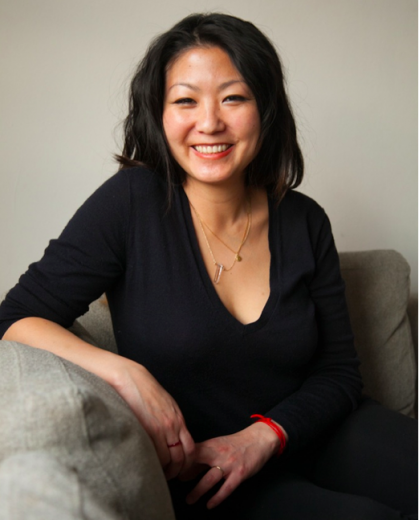
Anjie Cho, a registered New York State architect and feng shui interior designer, has been creating beautiful and nourishing spaces for more than 14 years. A graduate in architecture from the College of Environmental Design at the University of California at Berkeley, Anjie has managed a variety of high-end residential and commercial renovations.

The founder of Holistic Spaces, she creates and enhances balance and harmony with an understanding of sustainability and informed by the ancient practice of feng shui. Her focus is to create a nurturing and supportive environment for each of her clients, at whatever level they feel comfortable. Anjie is currently the co-manager of the New York City Chapter of the International Feng Shui Guild. She is a feng shui and green interiors blog contributor to Inhabitat.com and an eHow.com design expert and presenter.

Anjie is working on her forthcoming book, 108 Ways to Create Holistic Spaces: Feng Shui and Green Design for Healing and Organic Interiors.

Can you point to one event that triggered your interest in your career?
Ever since I can remember, I have always found great joy in creating, designing and sharing beauty with others. I can specifically remember one occasion I attended a basket-making class. I was in a class at the local park, and we soaked long fibers in water until they softened. Then we carefully shaped them into baskets. I love the metaphor of intertwining different elements into a beautiful container to hold objects and experiences.

...read full article

by Anjie Cho


eHow.com Video: Separating the Area in a Studio Apartment By Using a Curtain

Separating the Area in a Studio Apartment By Using a Curtain

Separating the Area in a Studio Apartment By Using a Curtain

Separating personal from public space is important. Use a curtain to facilitate this separation in a studio apartment.

see more eHow.com videos here

Video Transcript:

Hello, I'm Anjie Cho, and today I will share with you some tips to separate an area in a studio apartment by using a curtain.

The most challenging aspect of living in a studio apartment is separating your public active space such as your living, dining, kitchen and work areas from your private passive sleeping area. It's very important to visually and physically separate your sleep and public areas when designing the layout of your studio apartment.

One way you can achieve this is with curtains. In this example I've used a ceiling mounted curtain track. There are also curtain wires that will work but in my experience, depending on how long the span is, the wire will begin to droop with the weight of the curtain and this doesn't look good. The ceiling mounted curtain tracks and rails are rigid and end up looking the cleanest. Regular curtain rods will also work well if you can mount the supports on the ceiling.

Make sure you get the correct types of screws and anchors for the ceiling you have. I have concrete slab ceilings here, so I used a hammering drill and concrete anchors. Be sure to measure out the space you have so the holes are located correctly.

In this application I used a semi opaque fabric so there is visual for that privacy but you still see some light pass through. If sound is an issue, it might be better to use a heavier fabric.

The other advantage of drapes is flexibility. When you need more space you can open it up like this because after all a studio is a small living space.

I'm Anjie Cho, and this is how to separate areas in a studio apartment by using a curtain.

by Anjie Cho


eHow.com Video: Chinese Home Decorations

Chinese Home Decorations

Chinese Home Decorations

Chinese home decorations bring meaning and symbolism to a space. Coins, zodiac animals and lucky bamboo offer wealth, harmony, growth and more. Add oranges for positive energy. 

see more eHow.com videos here

Video Transcript:

I'm Anjie Cho, and today I'm sharing with you the meanings behind using Chinese decorations in your home.

First are the ten Chinese coins of the Ching Dynasty. These are reproductions of coins from the Ching Dynasty representing the ten emperors from that time period. The coins represent abundance of wealth and power. It's beneficial to put these in an area that's easily seen from the entry. It can bring you wealth and money from an upright and legitimate source.

Another Chinese home decoration is the 12 zodiac animals. This is a representation of all 12 animals together on a cord. Each year is represented by a different animal and they are all included here, rat, ox, tiger, rabbit, dragon, snake, horse, ram, monkey, rooster, dog and pig. Each animal represents an archetype. This decoration combines all 12 of the zodiac animals to represent harmony. This decoration is beneficial to put in the center of a home to represent harmony with all the members of the family.

The third Chinese home decoration is lucky bamboo. Bamboo is abundant in Asia and grows very quickly. It represents upright and honest growth as well as flexibility and adaptability. The bamboo plant does not flower or fruit. Its life span is long but simple. It's also hollow which represents an empty heart of humbleness. Coincidentally in Western culture, it's a symbol for the green sustainability movement.

In Feng Shui lucky bamboo is best when it's straight and not curly or twisted which can represent the opposite of upright and positive growth. Lucky bamboo represents a wood element of kindness, flexibility and healing growth.

Plants also add life energy to a space. Lucky bamboo is great because they can thrive in a variety of lighting conditions and in water or in soil and it's very easy to find. If the green starts to fade into yellow, it probably needs a little bit more light. Just so you know the lucky bamboo you will often find is technically not bamboo but symbolically the plant works the same way.

Finally, the last Chinese home decoration I will talk about is a bowl of oranges. In feng shui, oranges and orange peels contribute positive, fresh and brightening energy our inner and outer environments. Oranges are very auspicious and lucky in Chinese culture. You can always find oranges as decorations at any Chinese festivity. The oranges transform the home with vibrant, life-giving positive energy.

An easy way to incorporate oranges as a home decoration is to get a lovely Asian style bowl like this one, a green, black or white bowl complements the color of oranges very well. In Feng Shui a bowl of fresh oranges adds happiness and brightness to any room.

I'm Anjie Cho, Feng Shui designer with Anjie Cho Architect and founder of Holistic Spaces and today I shared with you the meanings and applications for Chinese home decorations.

by Anjie Cho