Feng Shui 101: Getting Started with the Basics

featured today on inhabitat.com

Photo credit: Shutterstock via inhabitat.com

Photo credit: Shutterstock via inhabitat.com

Feng shui is an ancient Asian art of placement developed thousands of years ago. Feng shui seeks to enhance and improve the flow of energy through your environment, to maximize the positive potential for your life. It is a truly holistic way to look at your environment. It may include interior or architectural design, but it’s really more than that. Feng shui looks beyond the superficial and is about creating awareness beyond what you see on the surface. The intent is to create an environment that supports and nurtures you.

As a holistic interior architect, many people share with me the wish to integrate feng shui into their homes and businesses, but they want to wait until the space is clean, or they have more time, or when they move. These are of course appropriate times to renovate or redecorate, but what most people don’t know is that you can incorporate feng shui at any time. It may even be more helpful when it comes at a challenging time. Feng shui is more than just about moving furniture around, it’s about shifting your environment physically and energetically to support and nurture your life. Even if you are not ready to renovate or redesign your home, you can still incorporate feng shui principles into your space.

How to get started: There are many aspects to feng shui, and one of the most important rules is called the “command position." The “command position” is the feng shui concept that governs where and how you can position your furniture in a given space to achieve the best and positive flow of energy. Ideally your bed, desk, and stove should be positioned so that you can see the door, while not in line with the door. Better yet, is to have your back against the wall furthest from the door, so you can see the expanse of the room, but not in directly in line with the door. This places you in command of the room, your home and your life, so that you can see what the universe brings to you and you are not in a position to be surprised. The “command position” situates you in so that you can clearly see ahead and move forward with your eyes open...

...read full article

by Anjie Cho


Organizing your Studio Apartment: Feng Shui Tips

featured today on Streeteasy.com

Streets are crowded in New York City and apartments are cramped.  And if you live in a studio, your lifestyle and domestic environment are likely to be even more crowded and cramped.  Check out the following tips for some simple ways you can create a more organized and calm atmosphere in your small space.

Separate the Space

The most challenging aspect of a studio apartment is separating your public space (in feng shui terms, your yang space which includes the living and dining areas) from your private, sleeping area (in feng shui terms, your yin space).  And believe me, I know how hard it is to keep these two spaces separate! When I lived in a studio, my bed functioned as my dining table, desk, and sofa.

In feng shui, there are two things that happen when public and private spaces intermingle like this.

First, you may have trouble sleeping and getting fully rested because your private space is surrounded with the active energy of the public yang activities of eating, working and socializing.  For instance, your rest time may suffer and be distracted because you see your work or your front door, which may keep you up at night.

In contrast, you may be unable to fully focus and concentrate on working, digesting your food, and connecting with the outside world because passive yin energy may trickle into the public areas.  This may make you more drowsy and lethargic.  For instance, you see your bed when you are working, so you think it’s a good idea to take a break and nap, instead of focusing on your to do list.

The first step in planning out your studio apartment space is to do whatever you can to visually and physically separate the yin and yang areas.  You can achieve this with freestanding room dividers, fabric panels or curtains, or you can get fancy and install a pressurized wall. 

The Sleeping Area

It’s best to have a standard mattress and headboard.  But in small spaces, many people opt for a convertible sofa bed or sometimes a Murphy bed.  It’s not the most ideal situation, but if you must, I strongly suggest you create a mindful daily ritual of putting away the bed each morning and opening it up before sleep each evening.  This creates an emotional and mental distinction between the active yang and passive yin energies that will maintain the necessary boundaries to keep your studio apartment relaxing and supportive.  It’s also best to keep the bed towards the rear of the apartment, not in view of the front door.  This is a safer and more protective feng shui position.

The Dining Area

If at all possible, do your best to create a separate eating area.  If there is not enough room for a table, try a wall mounted drop leaf table.  These do not take much room, but make a tremendous difference because you will have a surface to eat on.  The dining area represents how you nourish yourself.  It’s important to have a dedicated eating space where you can thoughtfully spend even a few minutes eating your breakfast or savoring a cup of tea.  This will do wonders for your digestion, and gives your body a chance to take pleasure in the act of eating and drinking.  

The Work Area

Similarly to a convertible bed, if there is no room for a separate desk, create a simple ritual to transform a table into a desk when needed.  For instance, when the table is used for eating, you can get a beautiful tablecloth or place mat, with a lovely plate.  Be sure to put away the notebooks and computers.  When it’s work time, be sure to fold up the placemat or tablecloth, and bring back the computer.  And when it’s sleep time, put it all away.

Although a studio apartment may be a challenging space, there are things you can do!  Separate the yin and yang areas and do what you can to make your sleeping, eating and work areas special, purposeful and supportive for you and your wants!

by Anjie Cho


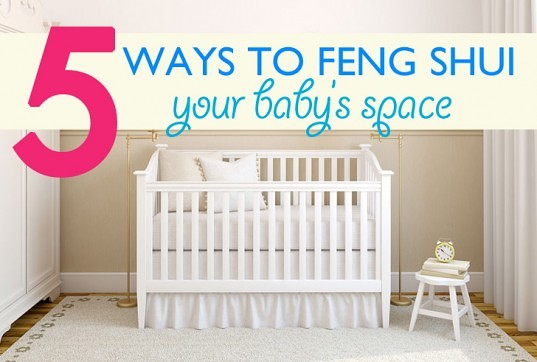
5 Ways to Feng Shui your Baby's Space

featured today on Inhabitots.com

image credit: Shutterstock via inhabitots.com

image credit: Shutterstock via inhabitots.com

As expectant mothers are preparing to welcome a new baby into the world, they also begin to put together the baby’s new home! This space is a place to support and nurture your newborn. It also represents how you want to receive your new family member into your life. I work with new and expecting mothers to implement holistic living changes, specifically by looking at the baby’s space and entire home. As a registered New York State Architect and Interior Designer for over a decade, I have been creating beautiful and nourishing spaces using environmental psychology, feng shui and green design principles. 

Feng shui is an ancient Eastern philosophy that examines the way that energy can best and most positively flow into and through your environment. Feng shui isn’t just about moving furniture around, but about shifting your space to physically and energetically support and nurture you, your family and your new child. Following are five simple ways to welcome your baby into your home using these principles.

Create Space

The first step is to create a space for your new family member. You have created space emotionally, mentally, and physically in your body and now it’s time to create space physically in your home. This means selecting a room or area dedicated to your child. Physically, if the area is not a separate room, partition the space if possible. You can do this with freestanding shelves, panels or even a curtain. Whatever it is, it should be sturdy and not unstable. This is important because you create physical, emotional and well-defined boundaries that are imperative for your relationship to your partner and with your child. Carve out a separate space for your child, their own space...

...read full article

by Anjie Cho