
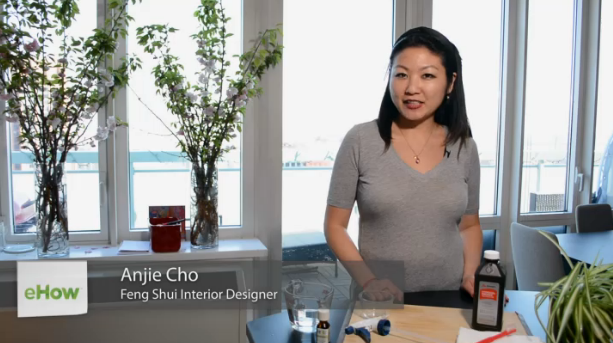
eHow.com Video: How to Make a Natural Cleaner With Peroxide

How to Make a Natural Cleaner With Peroxide

How to Make a Natural Cleaner With Peroxide

Using peroxide is an inexpensive and eco-friendly alternative to toxic cleaning products

see more eHow.com videos here

Video Transcript:

I'm Anjie Cho, and this is how to make natural cleaners with peroxide.

Unfortunately, many conventional cleaning products are made up of toxic chemicals. Not only do we breathe in these toxins, they get directly absorbed into our bloodstream through our skin. They also release toxins into the air and water supply. You absolutely don't want these products in your home. They poison you, your family and the planet as a whole.

It's easy to make a non-toxic alternative natural cleaner using hydrogen peroxide. Hydrogen peroxide is safe for our water supply because it breaks down in the water. It's also inexpensive at one or two dollars for a bottle like this. It's great as a cleaner because it's naturally antibacterial, and that's why we use it to clean cuts. Some uses for peroxide as a cleaner are one, mix it with some club soda to clean surfaces like counter tops.

Two, as a substitute for bleach. It's a natural whitener. Three, use it undiluted to sanitize toothbrushes, cutting boards and waste bins. My favorite way to use peroxide is to add a few drops of essential oil, like eucalyptus, which is naturally antibacterial, and use it for an anti-mildew shower tub spray. I just take a spray bottle, take the top off, screw it right onto the brown bottle.

By the way, the reason why hydrogen peroxide often comes in those opaque brown bottles is that the peroxide can easily break down in sunlight.

So it's best to keep it out of the sun and in the brown bottles. So have some fun and make your own do it yourself natural cleaner with peroxide.

by Anjie Cho


Eco-Friendly Paint Shopping

By now, you may know the importance of paying close attention to VOC content when purchasing paints for the interior of your home. That can be easier said than done though, with extensive labels and new terms that aren't always clearly understood. 

If you're looking for indoor paint, get a good idea of what your ecological goal is within the room you will be painting, and keep an eye out for these terms when shopping for paint

Natural 

Paints and finishes classified as "natural" are composed of only natural ingredients and contain no man-made chemicals. Paints in this category can be plant-based, milk-based or created with all-natural minerals. Notably, these natural paints are the healthiest for any indoor use, as they contain no chemicals and give off little to no smell, often pleasant at that!

Zero VOC

Take note here that the "zero" in this classification is not actually zero. Based on established EPA standards, certain low levels of VOC substances can still be legally called "zero," despite the fact that the paints do, in fact, contain some VOCs, albeit a much lower, healthier level when compared to traditional paint. It's also worth knowing that adding a color tint to paint increases the VOC level, but in paints with already low VOC, this number is still much safer. 

Low VOC

For the most part, the characteristic that makes a paint "low VOC" is that, rather than being produced with petroleum-based oils, the paint has been produced with a water base, therefore lowering the VOC level due to lack of those additional chemicals. These types of paints usually contain no more than half the VOCs present in traditional paints, and can sometimes be as low as 25% of the VOCs in an average can of paint. Keep an eye out here for "Green Seal Standard" paints, as these are certifiably some of the lowest "Low VOC" paints available. 

Green Seal

Paints with the Green Seal have a more detailed list of requirements than other low VOC paints, which makes them a safer, more environmentally friendly option. In addition to requiring a lower VOC concentration, Green Seal paints are also prohibited from using a select list of harmful ingredients and must meet certain performance standards including washability and abrasion-resistance. 

Making the choice to use a healthier, less toxic paint for home design is absolutely commendable. Just be sure that, when purchasing paint, you keep in mind what you need from your paint and ensure that the paint you select meets your, and the EPA's, criteria for lower VOCs. 

VOC Absorbing

If you're concerned about the VOCs already present in your home, try hunting down VOC absorbing paints, as these paints are equipped with a substance aimed at removing harmful VOCs from the atmosphere in your home. Once these gases have been absorbed by the paint, they remain trapped there forever, which is certainly a better place for them than in your family's lungs.

For best paint colors check out these articles:

by Anjie Cho


My Career Choice: Anjie Cho – Architect and Feng Shui Interior Designer

featured this month on Woman Around Town

Anjie Cho, a registered New York State architect and feng shui interior designer, has been creating beautiful and nourishing spaces for more than 14 years. A graduate in architecture from the College of Environmental Design at the University of California at Berkeley, Anjie has managed a variety of high-end residential and commercial renovations.

The founder of Holistic Spaces, she creates and enhances balance and harmony with an understanding of sustainability and informed by the ancient practice of feng shui. Her focus is to create a nurturing and supportive environment for each of her clients, at whatever level they feel comfortable. Anjie is currently the co-manager of the New York City Chapter of the International Feng Shui Guild. She is a feng shui and green interiors blog contributor to Inhabitat.com and an eHow.com design expert and presenter.

Anjie is working on her forthcoming book, 108 Ways to Create Holistic Spaces: Feng Shui and Green Design for Healing and Organic Interiors.

Can you point to one event that triggered your interest in your career?
Ever since I can remember, I have always found great joy in creating, designing and sharing beauty with others. I can specifically remember one occasion I attended a basket-making class. I was in a class at the local park, and we soaked long fibers in water until they softened. Then we carefully shaped them into baskets. I love the metaphor of intertwining different elements into a beautiful container to hold objects and experiences.

...read full article

by Anjie Cho