Why Save Water?

If you live in this century, and let’s face it, you do, you’ve undoubtedly been encouraged to save water in any way possible to you. One obvious reason for preserving our water supply is that, contrary to popular belief, water is not a renewable resource. Our planet has a finite amount of water, and only 1% of this resource is even available for human consumption. In addition to this very obvious reason to be wary of water use, there are numerous other factors influencing the mission to reduce our nation’s, and our planet’s, use of this precious resource.

As previously mentioned, of the finite amount of water available to us on Earth, only a stunning 1% is potable, and this number is rapidly decreasing due to excessive pollutants and litter being dumped into our clean water supply almost daily. We absolutely cannot live without clean drinking water, and neither can any other species supported by Earth. Every living creature needs water, which means that even if we redirect our pollution into water sources that humans do not currently use, we are still actively killing various species of the animal kingdom, many of which are already endangered. Even for advocates of animal consumption, this is an issue. What will you eat if we eradicate all existing species? Inability to conserve our water for later use ultimately means extinction of all life on our planet.

Aside from keeping the entire planet alive, conservation of water is beneficial for that other green substance we love: money. Taking care to monitor your water usage and preserve as much as possible directly influences the amount of money we spend each month, each year on utility bills. These equations are simple. Many of us are charged based on water consumption, as we are with any other energy source. The fewer gallons we utilize, the less money we pay. As a side note, popular methods for conserving water can save thousands of gallons of water annually. Conserving water doesn’t just decrease water utility bills, though. It also directly affects the cost of other energy bills including gas. The fewer gallons of water you heat for various reasons, from showering to washing clothes to washing dishes, the less gas you use to heat this water, which results in immediately lower gas bills.

Other reasons for conserving water include reducing state and national funds (to which we contribute) spent on public structure aimed at keeping our water supply flowing and fresh, reducing expenditures on sewage and wastewater processes and even reduction of the occurrence of sinkholes in some states.
by Anjie Cho


Ikebana: Contemplative Flower Arranging

featured this week on Over the Moon

As I tumbled off the bus with a heavy bag, I took a deep breath in of the brisk spring air in upstate New York. Before me was a rustic, ten room country house on a beautiful lake—a Buddhist retreat center called Shambhala Skylake Lodge.

As I pushed the large, wooden door open, I was softly greeted by the Tokonoma, or entry alcove, which is a visual focal point when first entering a Japanese home. This alcove contained a scroll with calligraphy and a soft, baby powdery pink ranunculus bloom.

And so began my Spring Kado retreat. Kado means “the way of flowers” and is a contemplative practice of flower arranging using classical ikebana forms. Ikebana is the Asian art of flower arranging. Yes, I was at a week long Buddhist retreat to meditate and arrange flowers! But Ikebana and Kado are not just flower arranging—they are a contemplative practice; meditation in action.

In our first arrangement, we were given Hosta leaves. This plant has full, soft and moist, green leaves with delicate stems. I tried for several minutes to arrange my leaf exactly where I wanted it. I had this vision in my mind and I really wanted the Hosta leaf to stay in this “perfect” spot.

While sitting there frustrated with my Hosta, I heard my neighbor grumble. When I peered in his direction, I couldn’t help but giggle. His Hosta leaf also had a mind of its own.

Although it’s not a flower, this Hosta leaf taught me to not expect something from it which it cannot give.

We can receive teachings from any everyday experience.

Do not expect from a flower (or leaf, or your partner, etc.) that which it cannot give.

I don’t know about you, but this immediately reminded me of many of my relationships and how I believed things would look or be better if it only matched what I had in my mind. If only my husband saw how important it is to put the dishes away in the dishwasher just how I like them. Why does my mother insist on worrying about me even though I tell her everything is great?

But forcing it is like poking the leaf over and over until the stem starts to break down. If the stem snaps, sometimes we can mend it; create a crutch of sorts. And even after all that, the leaf just might end up where it wants to go anyways. Maybe it’s not exactly where I pictured it but hey, it doesn’t look so bad over there. Maybe it looks better than where I wanted it to go.

Whether we are arranging flowers and plants at a Buddhist retreat center or just looking at things in your everyday life, we can receive deep teachings if we pay attention. Ikebana isn’t just arranging flowers, it’s a traditional and contemplative practice that teaches us how to live in harmony and balance with ourselves and the spaces we inhabit. 

by Anjie Cho


If you’d like to learn more about feng shui, check out Mindful Design Feng Shui School at: www.mindfuldesignschool.com

How to Stage Your Home for the Feng Shui Buyer

featured this week in Better Homes and Gardens

BHGRE_Feng_Shui_infographic_FINAL.jpg

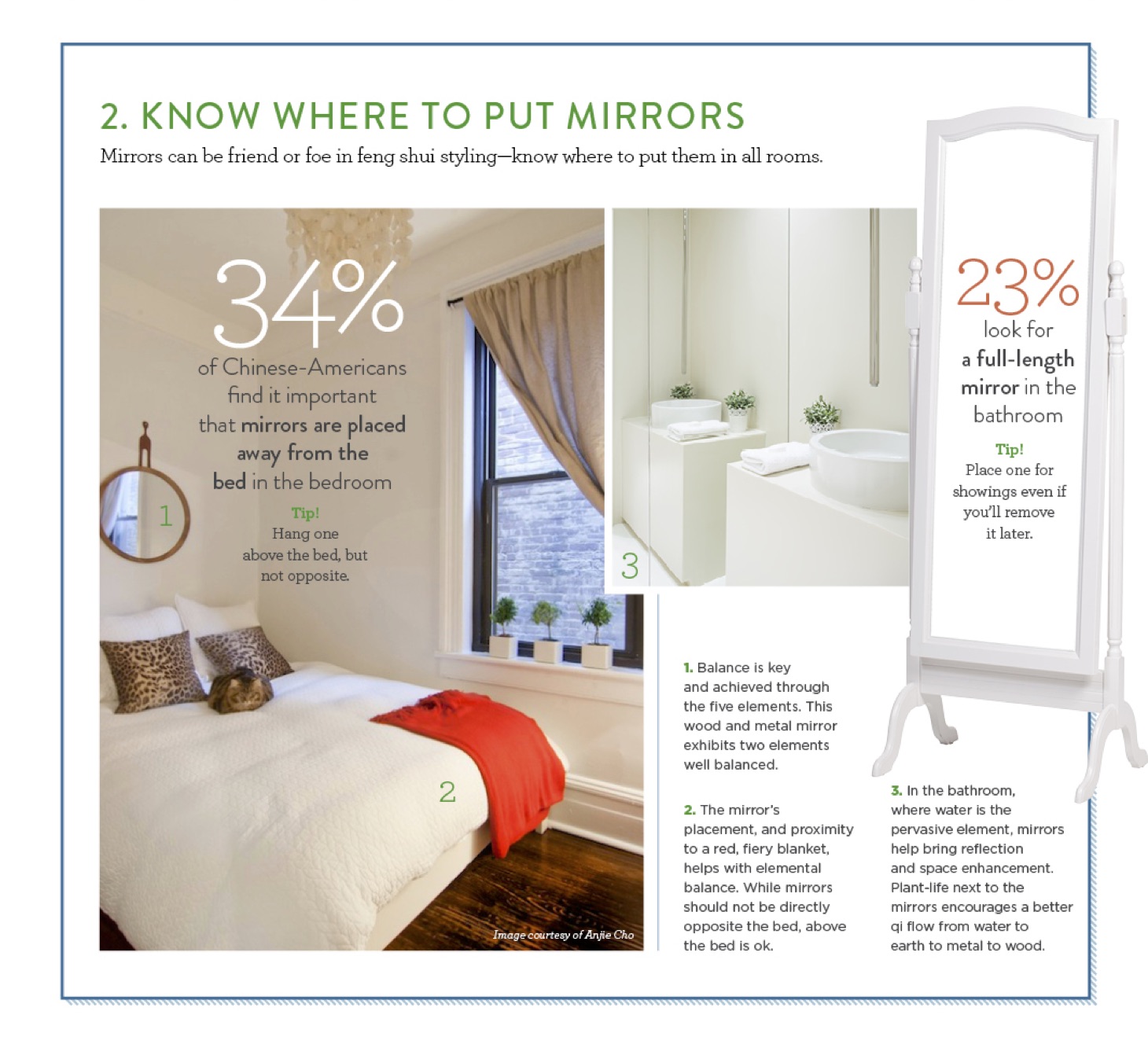
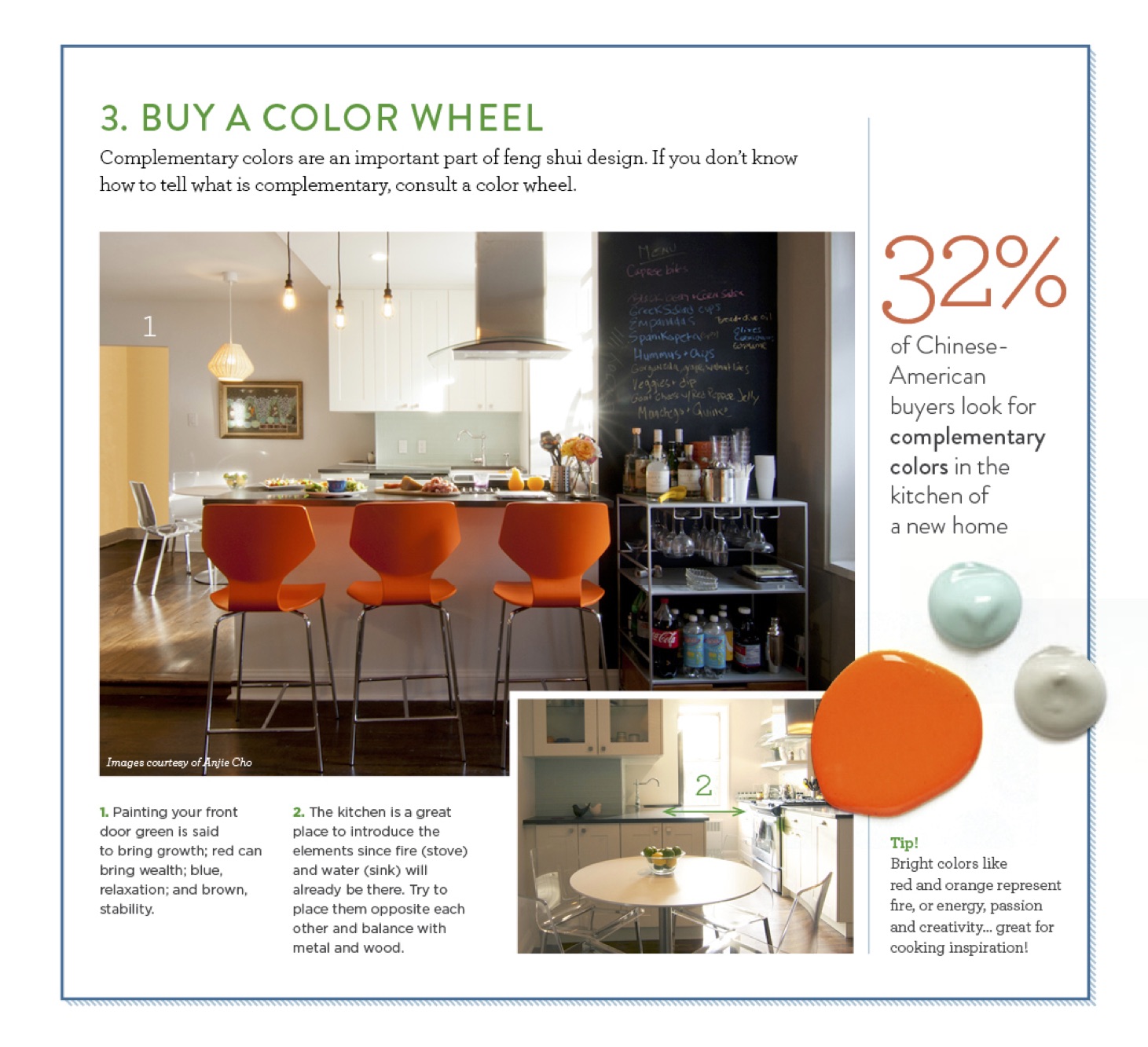
Collaborated with Better Homes and Gardens Real Estate to talk about Feng Shui for Chinese-American buyers

Better Homes and Gardens Real Estate recently conducted a real estate survey of the US market, focusing on Chinese and Chinese Americans who comprise the fastest growing segment of home buyers. As a whole, they spent an estimated $28.6 billion on residential real estate in the U.S. from April 2014 to March 2015.  

The research questioned 500 Chinese-Americans in partnership with the Asian Real Estate Association of America (AREAA) to understand the impact of the ancient design philosophy, feng shui, on this population’s home buying mindset and preferences. This research also has implications for furniture and other home furnishings purchases.

Feng shui is still a pervasive, even indispensable, design influence and lifestyle for such a large group of Americans. Some key points from the survey by Better Homes and Gardens Real Estate include:

    ...read full article