
After a long, hot summer, it's finally time to welcome a new season! It's always important to take care of ourselves, both inside and out, when changing from one season to another, and this year, our friend Sacha Jones, from Stiggly Holistics, has volunteered her insight! It's been a while since we spoke with Sacha, and we're happy to welcome her back to talk bringing in Autumn in a healthy, holistic way.
AC: Tell us a little bit about Stiggly Holistics and what you're up to these days.
SJ: Stiggly Holistics will be celebrating her 10th birthday soon, and we are looking to do some celebrating and relaunching between the fall and the spring. This will include introducing some new classes, starting some new women's groups, opening up my pottery studio and expanding that part of the business, and playing around with new packaging ideas for my product line... much good stuff on the horizon! I can't reveal it all now but just to say - between this coming October and the spring of '17, Stiggly Holistics will be seeing a little bit of a facelift, which feels really fun and exciting.
The heart, essence and roots will of course remain true to where we began - "nourish your body, nourish your soul" will always remain our motto. We believe in caring for the whole person - not just the food we put on our plates, but also the quality of our soul food, our home environment, how we care for the planet and so much more. It's all under the same holistic umbrella, and that's a very important part of the Stiggly mission. I'm hoping to have a little celebratory relaunch/anniversary party at some point, I will keep you posted.
Yes, please do! How does the autumnal equinox affect us, internally and externally?
I always love the autumnal and vernal equinox, because to me it's all about balance. Winter is extremely inward, summer very outward whereas spring and fall are a lovely mixture of the two. I love how the shadows change somewhere around the autumnal equinox, and with that there is an energy shift that is almost palpable. With the daylight and darkness being about the same, we tend towards a little more indoor time, perhaps getting to bed a little earlier, slowing down just a little bit, and we tend to get a little more grounded and centered.
What are some steps we can take to ease into Autumn in a healthy way?
My first suggestion is to get yourself to your local farmer's market and see what's in season. Let that guide your meal planning. Eating seasonally is more than a trend; it's really good for our body and soul. Nature provides what we need, just at exactly the right time. You will start to see more root veggies, and energetically these foods help to ground us. In this same vein I also recommend exploring herbal infusions and decoctions - and nourishing your body with "teas" like elderberry, ginger, oatstra, and other favorite herbs. Have fun experimenting with flavors you like, get really into the ritual of it all and sip, smile, breathe.
Secondly, I suggest really considering the beginning of Autumn as an opportunity to take a deep breath, release your shoulders and honor the moment as a new beginning. Whether or not you have children in school, or are yourself in academia, or if all that is long ago in your memory, there is a "back to school" vibe that's ingrained within us. Let's use that to let go of some non-serving stuff and embrace some new ideas. How balanced is your life? Do you have enough boundaries? Are you always saying yes to others? How is the balance between your work and play time? See where you can cut back in your work obligations a little - and by so doing, increase your time, energy and motivation for play and true relaxation.
Also, in keeping with the theme of balance, I really recommend getting into a daily practice of balancing on one leg. Aim for at least 30 seconds per leg, at least once a day. You can do it while you wait for the kettle to boil, while you brush your teeth, while you wait for a subway, or really anytime...to make this harder, more fun and more beneficial, I also recommend you try and do this with your eyes closed. Time yourself. How long can you balance that way? If it feels impossible, keep at it - like anything it gets easier with practice.
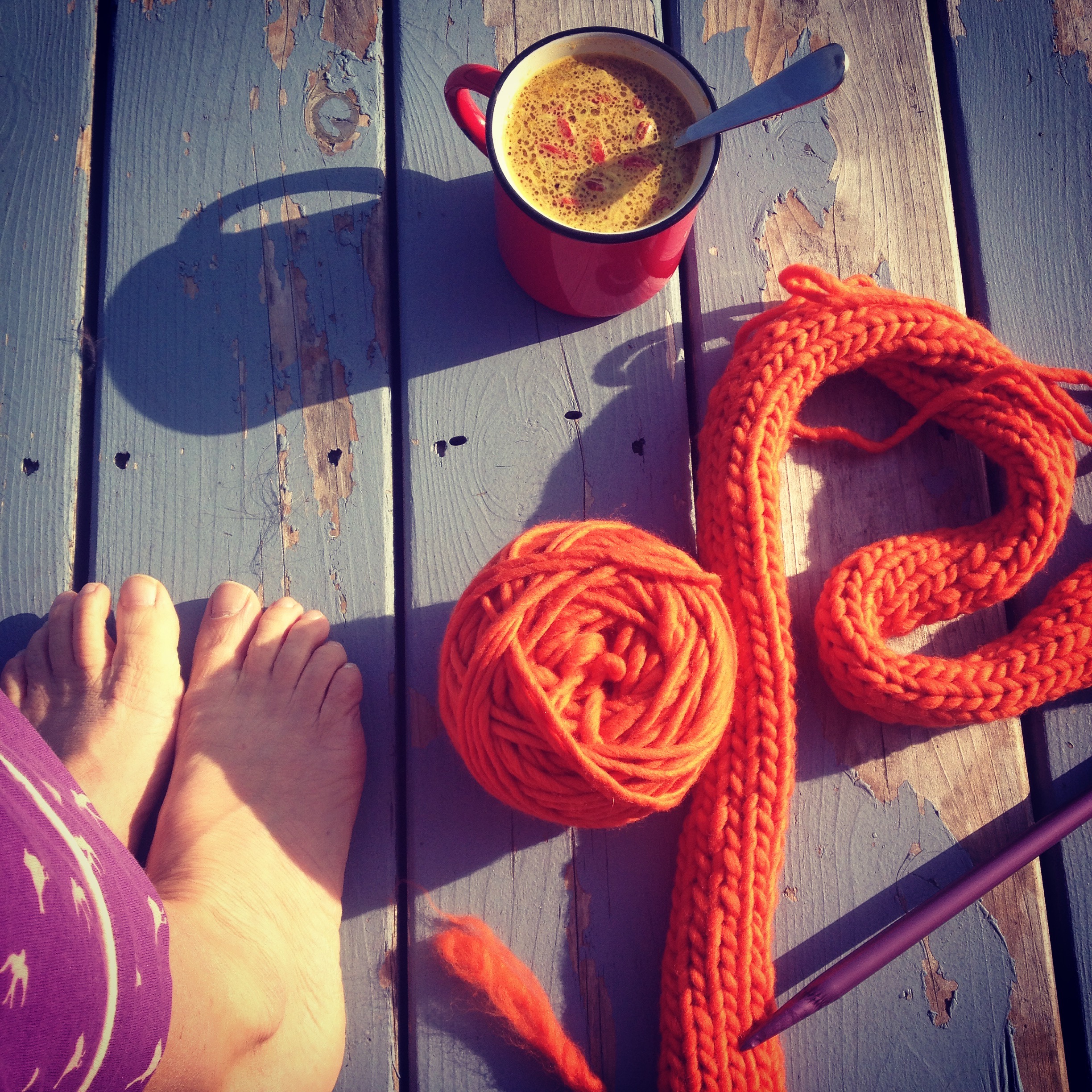
image credit: Stiggly Holistics
What's the best part of the new season, in your opinion?
A new season marks another chance for us to go inward and hit that proverbial "reset button" on ourselves. It's a chance to look within and see what's working, what's not, and a good time to re-evaluate our goals - personal & professional. I also love seasonal clothing, and Autumn is maybe my favorite, since I love jackets and home-made knitwear. It's the time to blow the cobwebs off the knitting needles and, in general, just start being creative.
Truly it's hard to put into words just how intoxicating Autumn is, but I really love the collective hum, which feels like excitement. It's almost like culturally we become squirrel-like, all rushing around, gathering "acorns," preparing for the colder months ahead while the delicious scents of pumpkin spices and hot cider fill the air. It's all about the ritual, the familiar and the comfort in that.
How can we use the concepts of Stiggly Holistics to create holistic spaces?
When I think of holistic spaces, I think of creating home-space that feels safe and cozy - somewhere you want to spend time.
When I consider nourishment and self care, it goes so much deeper than what we eat, as I've mentioned. And a very big component of that is home environment. I always want to know from my clients what home feels like. Does it feel safe, comfortable? Would you be comfortable inviting people over, even if your space is tiny? Do you make your bed every morning? Are the sheets and pillows comfortable? What is your lighting like? Do you have somewhere to sit and just be quiet - whether that's to read, meditate or just relax after a busy day at work? Are the things in your home relevant? Do you still love the art on the walls, the books on the shelves? Do you look around your abode and smile? Have a sense of pride?
You can start small when creating a holistic home environment - you don't have to spend a lot of money, but get a few things in place. Clean out your fridge and fill it with healthful, life-giving foods and try to avoid a build up of leftovers. Use green cleaning products (make them yourselves), and avoid chemicals in your home (this includes laundry detergent so you can sleep better on eco-cleansed sheets). Every season, go through your "stuff" and have a little clean out. I'm a fan of natural, "organic" materials and found objects (as well as antiques, thrift, stoop sales...), and believe holistic home spaces should be as void of plastic as possible.
Our "stuff" contributes to the energy of a home, and what we lay our eyes on contributes to the way we feel, so let's make our home spaces as beautiful and comfortable as possible - in a way that works for ourselves. Your home may not be featured in Dwell magazine, but do you love it? Do you feel truly at home there? That's what really matters. Home is truly is where the heart is, and I think keeping that concept at the core when you declutter, design and get cozy will help guide you to really loving where you live.
As always, such wonderful advice from Sacha on remaining true to yourself and taking care of you! What can you do in the coming months to treat yourself with loving care as we transition from warm, yang weather to the colder, yin season? Be sure to try out Sacha's recipe for cleansing fire water too!

Sacha Jones is the founder of Stiggly Holistics. he hails originally from Wales but is a long time New Yorker and spends her time between the East Village, and Sullivan County upstate. Stiggly Holistics specializes in holistic wellness - we want to get to know the WHOLE you and get you on the path to feeling your very best self. We run group classes, women's groups & offer individual counseling - as well offering a line of organic body balms and herb teas, and returning soon to the line - hand made ceramics. You can learn more by visiting our website, www.stiggly.com and you can sign up for our Juicy Tuesday Newsie musings for weekly motivation right here.


