
Connect to Mother Earth with Feng Shui

featured this week on Over the Moon 

In feng shui and other eastern philosophies, the yin side of the earth element is connected to maternal, feminine and receptive energies.

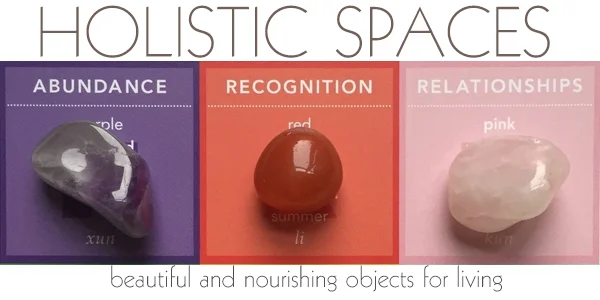
On the feng shui bagua map, the Relationship area is connected to this maternal element which also relates to your primary partnership, the south-west direction, the abdomen, spleen, internal organs and is symbolized by square shapes, the color pink, and soft, loose sand or soil.

To locate this area in your bedroom, stand in the doorway while looking into the room. The relationship/mother area is the furthest corner back on the right side of the room.

Below are some feng shui adjustments to strengthen mother earth energy to support and nourish you. These adjustments can be done in your bedroom for the best results.

Add the element of fire to your space with red accents. Fire produces and creates earth. The flames of a fire create ashes which turn into earth. Just a little bit of red goes a long way!

Rose quartz is a healing and nurturing natural crystal that also supports self-love. This is a wonderful crystal that you can place in the Relationship area of your bedroom to support you.

Heavy objects such as statues also characterize the earth element. If you have a deity statue that you love, or even a heavy stone, this is great in any area of your bedroom to provide stability and contribute to the earth element.

Cultivate more nature in your bedroom or home with indoor plants. Plants relate to the element of wood, which can balance earth. The strong roots of a tree can overcome any stubborn hard earth. Plants also encourage kindness and the color are healing. 

Finally, to strengthen your mother earth energy, be open and receptive to embrace what comes to you through your environment, both positive and negative. Sometimes inaction and observation is the best reaction.

Take some time this month and honor the mother earth in you with some feng shui! 
 by Anjie Cho


How to propagate plants with cuttings

IMG_9730.JPG

Yay! It’s finally feeling like spring here in NYC. As Earth Day just passed last week on April 22nd, it is perfect time to refresh your indoor plants. You can re-pot them, prune them, and even propagate them. I think the easiest way to share your plants is to propagate with cutting. This works with most plants that have many stems or side branches.

You’ll need a clean knife or plant clippers, and a plant.

These photos are from a Golden Pothos that’s been with me a long time. It was a housewarming present when I moved into my first apartment in NYC. It’s very hearty and probably one of the easiest houseplants to maintain. Remember, plants can bring nature into your home to help create a healing and holistic space for you. Plants are often used as feng shui adjustments.

  • Select a healthy stem to use as your cutting.
  • Locate a node, where a leaf and stem meet. It’s best to cut just below the node.
  • The easiest thing is to place the cutting in a glass of water so it can grow roots. You can also place it back into the original soil or new soil to grow roots. If you want to share with someone, place it in a moist paper towel for easy transport!

Propagating plants with cuttings is easy! Do you have a plant you’d like to share with someone today?

by Anjie Cho


Work your Green Thumb to Improve Air Quality

Chemicals released by carpets, foam insulation, paint and other sources are present in the air we breathe. As our homes become better insulated, those indoor air pollutants can linger longer in the spaces we inhabit. Here’s the good news: You don’t need to invest in an air purifier or other costly solution. What you need is something green and leafy

Indoor plants are one of the most cost-effective ways to brighten a space, create a relaxing, restful environment, and purify the air. In fact, in the 1980s, NASA studied house plants as a way to naturally and cost-effectively purify the air in space. The results of that study, and others since, show there are plenty of household plants that soak up the air pollutants and release fresh, clean oxygen. 

Here are five plants to get you started:

Aloe Vera

When it comes to breathing easier, aloe helps to clear formaldehyde and benzene from the air. Beyond that, this easy-to-grow plant is perfect for a sunny kitchen window where the gel found inside it’s leaves can be used to soothe mild burns. Notice brown spots on your plant’s leaves? The amount of harmful chemicals in the air may be excessive. 

English Ivy

NASA listed this beauty as its top pick. In the study, English Ivy was the most efficient in absorbing pollutants. From formaldehyde to soaking up carcinogens from second-hand smoke, this low-maintenance plant should be part of your décor. 

Peace Lily

Although you’ll want to keep this plant out of the reach of children and pets, the Peace Lily offers beauty and high marks as an air filter. In fact, this plant topped NASA’s list for removing the three most common volatile organic compounds (VOCs): formaldehyde, benzene and trichloroethylene, among other air pollutants.

Rubber Tree

If your thumb is more brown than green, pick up a rubber tree. This low-maintenance plant thrives even in poor lighting. Don’t let its easy care fool you; the rubber tree is also a powerful toxin eliminator. 

Snake Plant

The snake plant is a night owl. It’s efficient at absorbing carbon dioxide and releasing oxygen at night while most plants are doing so during the day. This plant thrives with little light and water and will absorb the toxins released by your carpets and wood furniture.

by Anjie Cho